

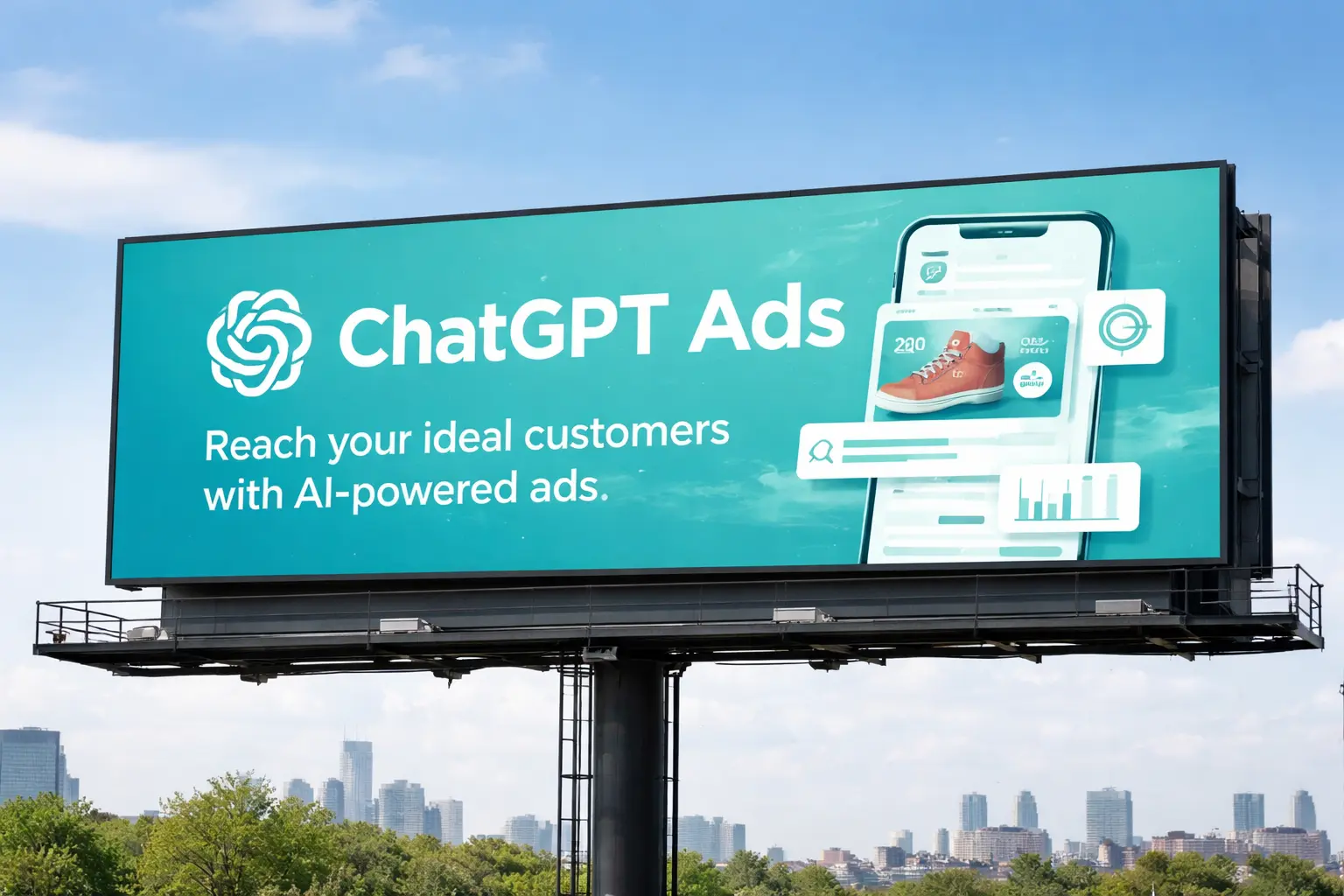
For most of the last twenty years, digital visibility meant ranking in search engines, buying paid media and building remarketing loops around web traffic. That logic still matters — but it is no longer the full picture. A growing share of discovery now happens inside large language models, where users ask direct questions, compare options and receive synthesized answers instead of lists of links.
That changes the role of visibility. In traditional search, the user still does most of the filtering. In AI systems, the model itself becomes part of the filter — shaping which brands, products and categories feel relevant in the first place. For businesses, that makes LLM visibility commercially meaningful, not just interesting from an SEO or branding perspective.
What LLM visibility actually means
LLM visibility is the degree to which a brand appears, is understood, or is preferred inside AI-generated answers. It is influenced by how clearly a business is represented across the web, how often it is associated with certain use cases, and how well the available information around it helps a model interpret where it fits.
This is not the same as classic SEO. Search visibility is page-based and rank-based. LLM visibility is contextual. It depends less on a blue-link result and more on whether the model sees your brand as a relevant part of the answer. That makes brand clarity, reputation, topical association and content quality more important than many teams realize.
Why this matters now
More people are using AI systems as part of the research and decision process. Users ask ChatGPT what software to use, what supplement to choose, how to compare providers, which tool is best for a job. Those are not abstract informational moments — they are early commercial moments.
When that behavior grows, the place where recommendations happen becomes strategically important. If a model is helping users narrow their options, then brands need to understand both how they are surfaced organically and how they can participate through paid placements where relevant.

From visibility to traffic
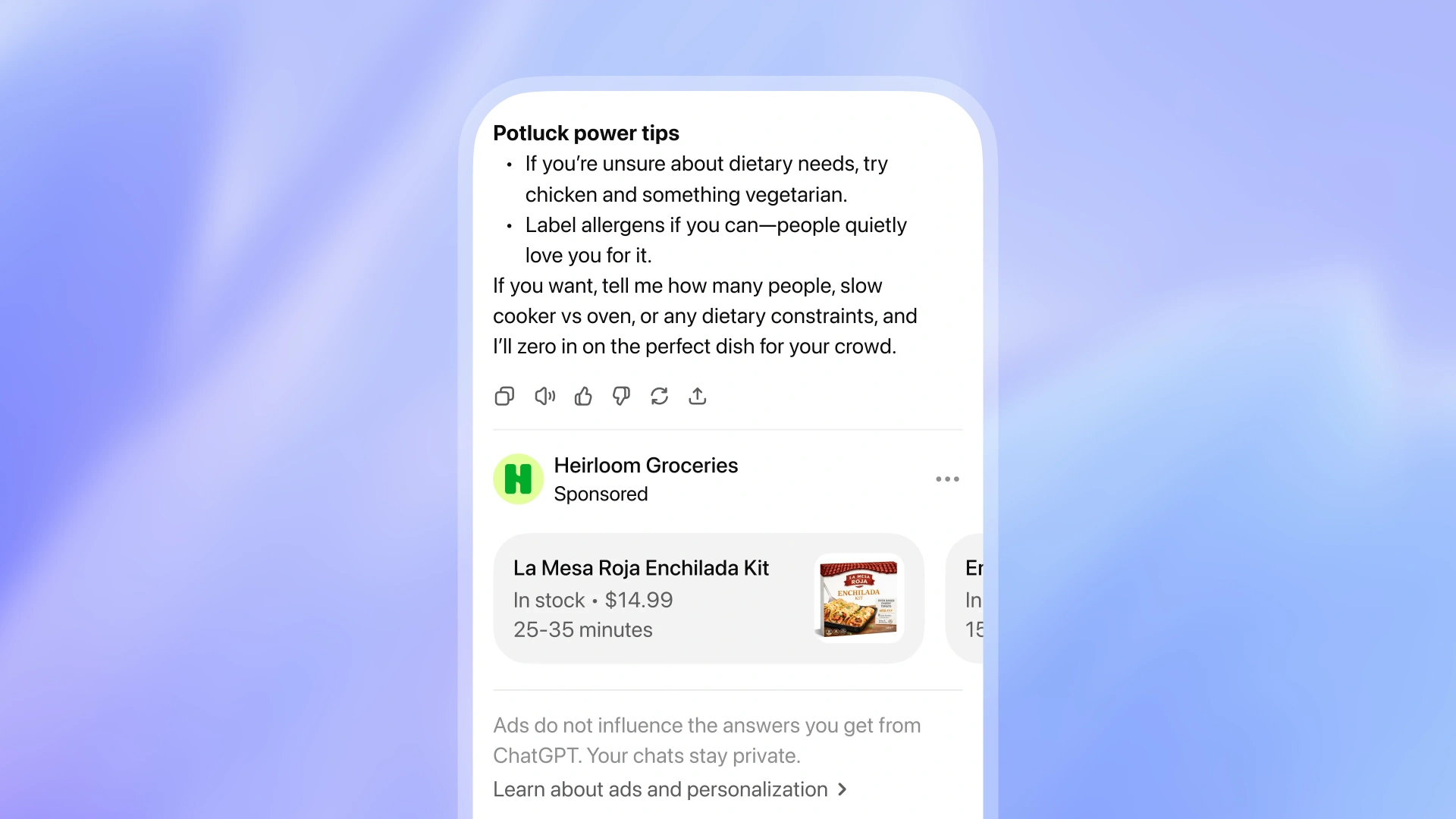
The commercial significance becomes clearer when visibility turns into traffic. Historically, search and social have dominated this because they converted attention into site visits with mature ad products. ChatGPT is now beginning to create a version of that flow inside AI conversations — clearly labeled sponsored content shown in relevant contexts, separate from the model's answer and selected based on relevance to the conversation.
That creates a bridge between AI-native discovery and measurable acquisition. Instead of treating AI visibility as a passive branding topic, brands can start thinking about how to capture relevant demand when users are already exploring a problem, comparing options or trying to make a decision.
How ChatGPT ads work
ChatGPT ads are not a banner or social format transplanted into a chatbot. Their logic is closer to contextual recommendation than interruption. Ads are matched to the conversation and informed by signals like the user's prompt, the advertiser's landing page, ad copy, keywords and contextual hints. Sponsored content is labeled and designed not to alter the answer itself.
This distinction matters: the advertising opportunity sits beside intent rather than ahead of it. In a feed, brands interrupt attention. In ChatGPT, brands appear in the middle of a reasoning process that is already active. That makes the traffic potentially more relevant — but it also raises the bar for message quality and landing-page fit.
Why ChatGPT traffic is different
Traffic from ChatGPT is different because the user typically arrives with more context and stronger intent than on many other channels. A person asking a model to compare options or solve a specific problem is often further along the decision process than someone glancing at a social ad between unrelated content.
For B2B, health, software, education, finance and other considered purchases, that matters a great deal — a smaller volume of higher-intent traffic can be more useful than larger volumes of low-intent traffic, because the user is actively trying to understand, evaluate and reduce uncertainty before acting.
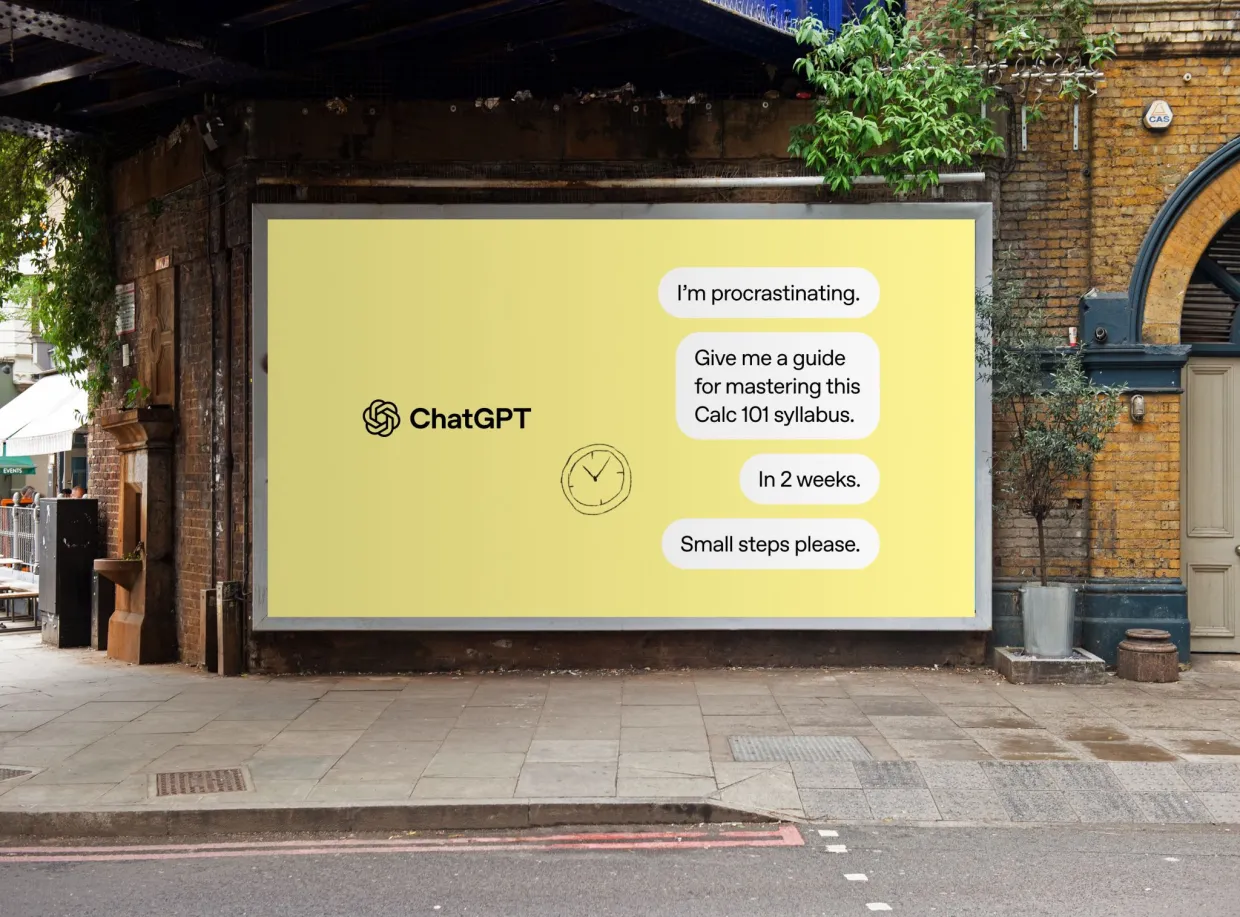
The shift isn't just that ChatGPT now has ads. It's that AI systems are becoming part of the discovery infrastructure of the internet.
The organic layer
Before paid AI traffic becomes efficient, the organic layer still matters. Brands need to be legible to models. That means the web needs to present a coherent picture of what the company does, who it serves, what it is known for, and why it should be included in an answer.
- Clear positioning on the website
- Strong topic-specific content
- Consistent brand language
- Third-party mentions and citations
- Proof points that reinforce authority
- Pages that explain use cases — not only features
The point is not to "optimize for AI" in a gimmicky sense. It is to reduce ambiguity. Models are more likely to surface brands they can understand in a clear and consistent way.
The paid layer
The paid layer matters because it gives brands a more immediate route into these decision environments. Organic visibility compounds over time, but ads create the ability to participate now — provided the placement is relevant and the campaign is managed properly.
For marketers, this introduces a new media-planning question: how much of the future acquisition mix will happen inside AI assistants, and what does it take to build competence there before the market becomes crowded? That is a more strategic question than whether to "test AI ads." It is a question about whether a company wants to learn early or pay the premium of learning later.
What brands often get wrong
The easiest mistake is treating this as an access problem. New ad products often begin with limited rollout, and OpenAI has expanded access through partners while rolling out self-serve. But access alone is not an advantage for long. Operating competence is.
The second mistake is treating ChatGPT ads like standard search or paid social. The context is different, the user mindset is different, and the ad needs to connect naturally with the conversation. Generic copy, weak landing pages and poor measurement will be exposed quickly in an environment where relevance matters more than volume.
The third mistake is isolating AI traffic from the broader growth system. This channel should not sit in a silo. It should connect to the same attribution logic, conversion pathways and commercial goals as the rest of paid media. With UTM tracking, pixel-based measurement, the Conversions API and conversions reporting now in place, the groundwork exists to integrate it properly — if the setup is taken seriously.
What effective usage looks like
The companies most likely to benefit from ChatGPT ads aren't necessarily the ones with the biggest budgets. They are usually the ones with the clearest proposition, the strongest understanding of intent, and the discipline to connect media with landing-page experience and measurement.
- Target commercially relevant conversational contexts
- Write copy that reflects the actual decision moment
- Send users to pages built for that exact question
- Measure downstream actions cleanly
- Iterate on traffic quality, not click volume
Why visibility and ads belong together
Many companies discuss these as separate topics: one team talks about organic AI visibility, another about ad experimentation. In reality, they reinforce each other. A brand that is consistently understood by AI systems, positioned clearly on its site and present in the right informational contexts will usually be better prepared to convert traffic coming from AI conversations.
Paid placements, in turn, reveal what kinds of prompts, problems and contexts produce the most qualified visits. Over time, those learnings shape content, positioning and the broader way a company thinks about discoverability in AI systems. The useful framing isn't "AI SEO" versus "AI ads." It is visibility plus activation.
Representation. Visibility. Activation.
Representation
How clearly does the web explain what your business is, who it serves and what it does best?
Visibility
How likely is your brand to appear in AI-driven conversations around the problems you solve?
Activation
How effectively can you turn relevant AI visibility into measurable traffic and conversions through ChatGPT ads and related formats?
Most brands are weak in at least one layer. Some are visible but poorly positioned. Some are well positioned but not present. Some can buy traffic but cannot measure or convert it. The opportunity is to build all three together.
Who should care most
This matters most for companies whose user journey includes research, comparison, uncertainty or explanation: software products, health and wellness brands, financial products, education businesses, marketplaces, professional services — and any complex or high-consideration category where AI assistants help users make sense of options.
If the decision requires explanation, the environment where explanation happens becomes commercially important.
Where this is heading
The long-term significance isn't that ChatGPT now has ads. It is that AI systems are becoming part of the discovery infrastructure of the internet. Once that happens, brands need to think not only about where they rank or what they target, but about how they are interpreted and recommended in answer-based environments.
That is a meaningful change in digital marketing — a move from optimizing for clicks alone toward optimizing for inclusion in decision-making systems. Some of that will be earned. Some of it will be paid. The important thing is that both are now real.
Bottom line
LLM visibility is no longer a niche topic for SEO specialists or AI enthusiasts. It is becoming part of how brands are discovered, compared and chosen. ChatGPT ads extend that shift by creating a paid layer inside those same conversational environments — giving marketers a way to participate not just after intent has formed, but while it is forming.
For brands that rely on relevant traffic rather than empty reach, that makes this a topic worth understanding in depth. The companies that build competence now will be better positioned as AI-native discovery becomes a normal part of how customers find and evaluate businesses.
Common questions, honestly answered.
- What is LLM visibility?
- The degree to which a brand appears, is understood, or is preferred inside AI-generated answers. It is shaped by how clearly the brand is represented across the web and how naturally it associates with the problems users bring to AI assistants.
- Are ChatGPT ads like search ads?
- No. Ads are matched to the context of the conversation rather than to isolated keywords, and they appear as labeled sponsored content alongside the answer. The mental model is contextual recommendation, not interruption.
- Which businesses benefit most?
- Brands selling considered purchases — software, health, financial products, education, marketplaces, professional services — where the user arrives with a problem to solve rather than a product already chosen.
- How does attribution work?
- Standard tooling applies: UTM parameters, pixel-based measurement, the Conversions API and conversions reporting. The channel can sit inside the same attribution stack as the rest of paid media.
Ready to operate inside the next discovery layer?
Abakus is one of the early-stage agencies implementing, launching, optimizing and scaling brands on OpenAI's ad surface — and tightening the organic layer that makes those campaigns convert.